
Surgical training has long relied on a combination of textbooks, observation, and hands-on practice with cadavers. Yet as technology reshapes nearly every corner of medicine, the operating theatre is no exception. Virtual reality simulators are steadily redefining how the next generation of surgeons learns its craft, offering an immersive and repeatable alternative to methods that have remained largely unchanged for decades.
In brief
- Traditional surgical training methods like textbooks and observation are limited because they fail to effectively build the muscle memory required for complex procedures.
- Virtual reality simulators provide a repeatable, scalable, and risk-free environment that overcomes the ethical and cost constraints associated with cadaver-based training.
- Research indicates that simulator-trained surgeons often achieve superior results, such as faster task completion and reduced tissue damage, compared to those trained with traditional methods.
- Modern surgical simulators offer high anatomical fidelity, allowing trainees to experience realistic tissue reactions and spatial awareness in a controlled virtual operating room.
- Virtual platforms enable objective performance evaluation by generating granular, data-driven metrics like error frequency and instrument handling accuracy, reducing reliance on subjective assessments.
- The ability to practice procedures repeatedly within a simulator allows trainees to internalize technical skills and address specific weaknesses, leading to better patient safety and clinical outcomes.
The evolution of surgical learning: beyond traditional classrooms
Limitations of Textbooks and Observation
For generations, medical students entered the surgical field armed chiefly with anatomical knowledge absorbed from dense volumes and the experience of watching senior surgeons at work. While these foundations remain valuable, they carry an inherent shortcoming: passive learning rarely translates directly into refined motor skill. Reading about the precise angle of an arthroscopic instrument or observing a laparoscopic procedure from across the theatre does little to build the muscle memory that defines a competent surgeon. The gap between theoretical knowledge and practical readiness has always been a challenge in medical education, and traditional classroom methods alone cannot bridge it.
The need for practical, risk-free practice
Cadaveric training has historically filled this void, giving trainees the opportunity to handle real tissue and develop spatial awareness within the human body. Research comparing cadaver-based and simulator-based approaches in shoulder surgery, involving 34 orthopaedic trainees split into two groups, found that both methods produced similar overall scores, suggesting comparable effectiveness in conveying surgical skills. However, the simulator group completed tasks more quickly and caused less damage to cartilage, hinting that virtual reality training may carry distinct procedural advantages. Beyond performance metrics, cadavers are expensive, ethically complex to source, and cannot be reset for repeated practice. The demand for a scalable, risk-free environment in which students may rehearse procedures without consequence has driven the rise of surgical simulators as a credible alternative.
Virtual Dive: Discover the Surgery Simulator in Action!
Step inside the virtual operating room
Strapping on a headset and entering a virtual operating room is a markedly different experience from watching a procedure unfold on a screen. The user is placed directly within the simulation, surrounded by a rendered environment that replicates the spatial logic of a real theatre. Every instrument, every monitor, every element of the setup is designed to mirror the world surgeons inhabit in clinical practice. For medical professionals and students alike, this immediacy accelerates the transition from theoretical understanding to practical intuition. Unlike video games, which share some of the same underlying technology, surgical simulators prioritise anatomical fidelity and procedural accuracy above all else.
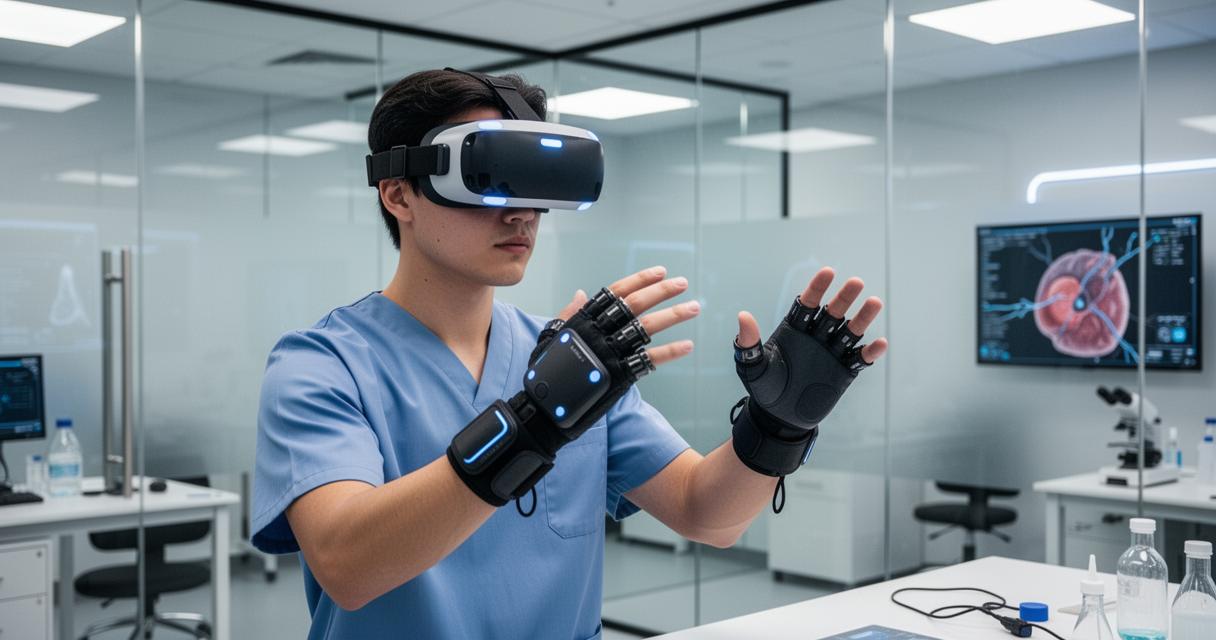
Experiencing life-like human anatomy through headsets
One of the most compelling qualities of modern virtual reality in medical training is its capacity to render human anatomy with remarkable detail. A trainee performing a simulated orthopedic surgery procedure can observe how tissue responds to pressure, how the field of view shifts during an arthroscopy, and how subtle movements of the tool alter outcomes within the joint. This level of immersion transforms the headset from a novelty into a genuine learning asset. Some platforms have extended this philosophy beyond pure surgical rehearsal, exploring applications such as hypnosis for patient management, illustrating how virtual environments can serve multiple dimensions of healthcare.
Tangible Benefits of Virtual Reality in Medical Education
Accelerating muscle memory and tool familiarisation
Repeating a procedure dozens of times within a simulation environment, without ethical constraints or resource costs, allows trainees to internalise the handling of surgical tools far more efficiently than traditional methods permit. Research into laparoscopic training found that both physical and virtual simulators could differentiate between experience levels across a range of tasks, with virtual systems demonstrating statistical significance on the majority of assessed metrics. This suggests that virtual reality simulators are sensitive enough to reflect genuine skill development, making them useful not only for practice but for surgical skill assessment as well. The ability to repeat a movement until it becomes instinctive is precisely the kind of training that high-stakes surgery demands.
Improving patient safety and clinical outcomes
Ultimately, every advance in surgical training serves a single overarching goal: better outcomes for patients. When a resident enters an actual operating room having already rehearsed a procedure repeatedly in a controlled virtual environment, the margin for error narrows. Studies in the field suggest that simulator-trained surgeons show fewer procedural complications in certain measures, a finding with direct implications for patient safety. As medical simulation technology continues to mature, its role within residency training programmes and broader clinical training curricula is only set to grow. Virtual environments do not replace the irreplaceable experience of working with real patients, but they equip professionals with a level of preparedness that was simply not achievable under old-school methods alone. In a field where hesitation can carry serious consequences, that preparation is invaluable.
Measuring proficiency: data-driven performance evaluation
The shift towards virtual reality in surgical training has prompted a rigorous examination of how competency is measured and validated. As medical education evolves, the capacity to quantify a trainee’s progress through objective, reproducible metrics has become a defining advantage of simulation-based learning. Rather than relying solely on the subjective judgement of a supervising surgeon, virtual surgery simulators generate detailed performance data that can be analysed, compared, and acted upon with precision.
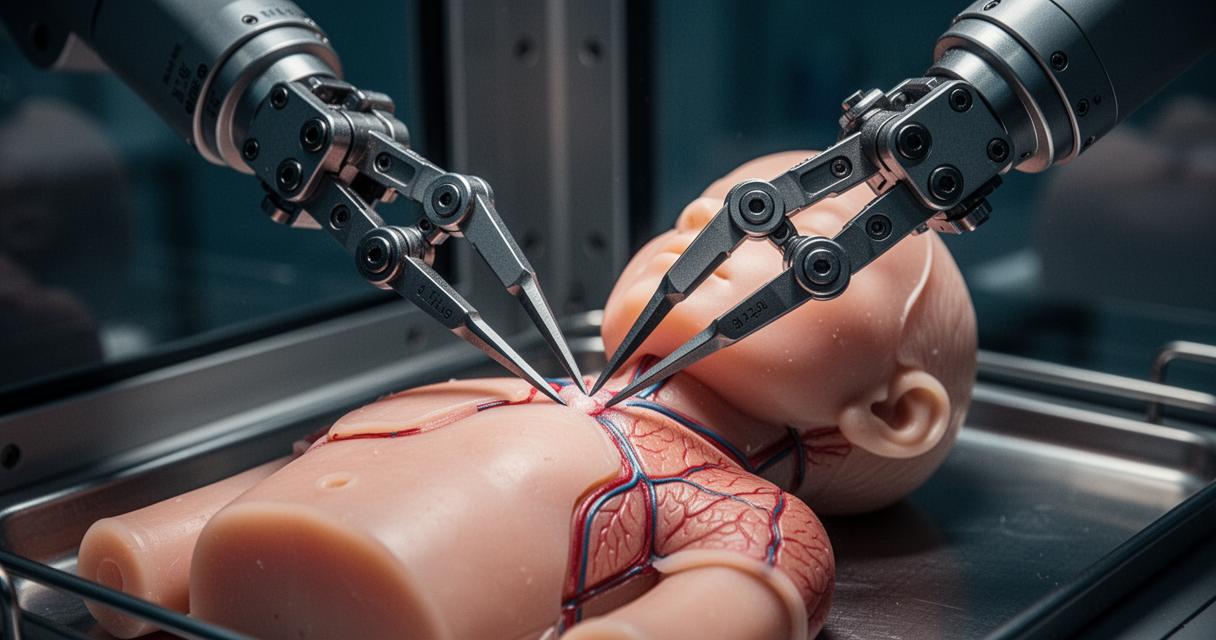
Objective analysis of surgical competency
One of the most significant challenges in traditional surgical training has been the inconsistency in how competency is assessed. In cadaveric or theatre-based settings, evaluation depends heavily on the observer’s experience and personal benchmarks, introducing variability that can disadvantage trainees depending on their institution or mentor. Virtual reality simulators address this directly by capturing granular performance indicators — task completion times, instrument handling accuracy, tissue interaction quality, and error frequency — all within a standardised environment.
Research comparing simulator-based and cadaveric training in shoulder arthroscopy, involving orthopedic trainees divided into two groups, found that those trained on a virtual reality platform completed tasks more quickly than their counterparts trained on cadavers, a statistically significant result. Notably, the simulator-trained group also demonstrated fewer instances of humeral cartilage damage, reflecting a measurable improvement in the precision of instrument handling. Both methods yielded comparable overall scores, confirming that virtual simulation can deliver equivalent educational value whilst simultaneously offering richer, more granular performance data.
This capacity for objective surgical skill assessment is particularly valuable during residency training, where the pressure to demonstrate competency is high and training opportunities may be limited. A simulator does not tire, does not have competing clinical priorities, and does not alter its evaluation criteria from one session to the next. For students entering the field of orthopaedic surgery, laparoscopic training, or arthroscopy simulation, this consistency represents a meaningful leap forward in how surgical competency is built and verified.
Refining technique through repeatable simulation cycles
Beyond assessment, the true power of virtual reality surgical simulators lies in their capacity for repetition without consequence. In traditional clinical training methods, a trainee’s access to hands-on surgical practice is constrained by patient safety considerations, theatre scheduling, and the availability of cadaveric material. Each repetition in the real world carries inherent stakes. Simulation removes those stakes entirely, allowing trainees to revisit the same procedure dozens of times, isolating specific technical weaknesses and addressing them methodically.
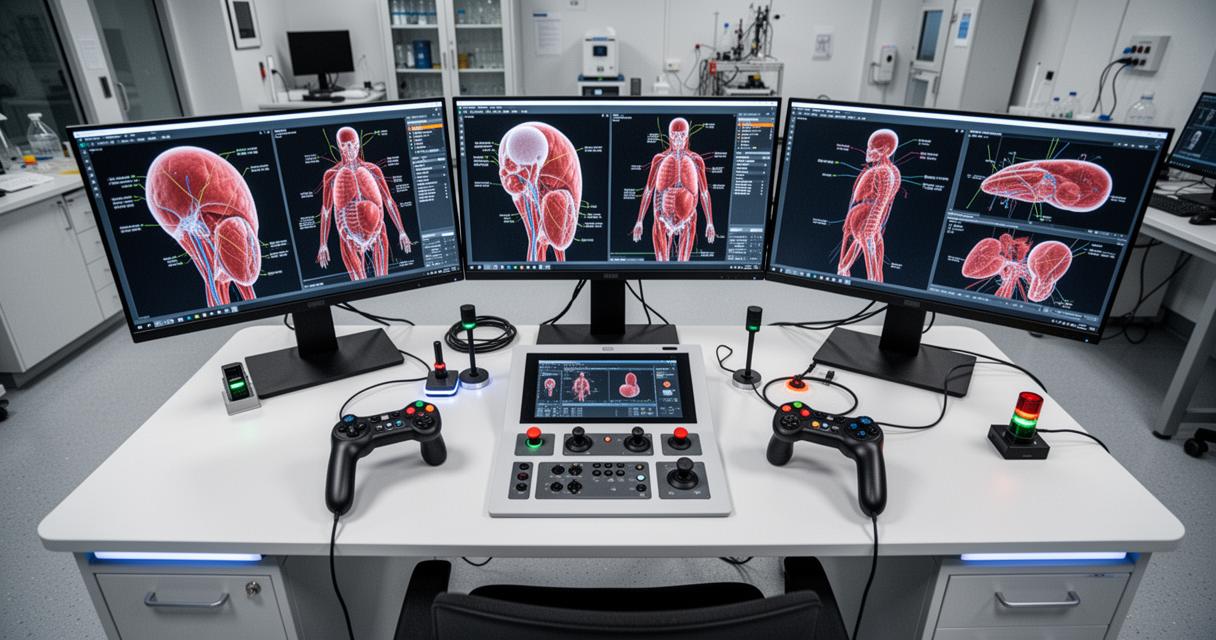
Studies examining laparoscopic training simulators have explored how both physical and virtual platforms respond to differing levels of user experience. Across a range of tasks, virtual reality systems demonstrated statistically significant sensitivity to experience level, distinguishing performance across multiple task parameters. This responsiveness to skill variation is central to the technology’s utility — a simulator that cannot differentiate a novice from an experienced surgeon provides limited pedagogical value. The data suggests that modern surgical simulators are sufficiently sophisticated to detect and reflect the subtle differences in technique that separate proficiency levels.
For medical education institutions, this means that simulation cycles can be structured as a genuine learning progression rather than a one-off exercise. A trainee working through repeated arthroscopy simulation scenarios will find that the technology tracks improvement over time, identifies persistent errors, and can be configured to introduce increased complexity as competency develops. This iterative model mirrors the principles underpinning modern learning science — spaced repetition, deliberate practice, and immediate feedback — and applies them directly to the surgical theatre environment.
The integration of virtual reality tools into surgical training also holds particular promise in contexts where access to traditional resources is restricted. Whether due to geographic constraints, institutional capacity, or broader disruptions to clinical environments, the ability to maintain high-quality training through a headset and a purpose-built simulation setup ensures that standards need not slip. As the medical world continues to adapt, the role of simulation technology in producing competent, well-assessed surgical professionals appears not merely supplementary, but central to the future of the field.