The night sky has captivated humanity for millennia, inviting us to peer into the cosmos and uncover its mysteries. Whether you are a curious beginner or an enthusiast seeking to upgrade your equipment, the decision between a telescope and a spyglass can significantly influence your celestial viewing experience. Both instruments offer unique advantages, yet they are designed with distinct purposes in mind. Understanding their differences, key specifications, and practical applications will empower you to make an informed choice that aligns with your astronomical ambitions.
Understanding the Fundamental Differences Between Telescopes and Spyglasses
Core optical design and magnification capabilities
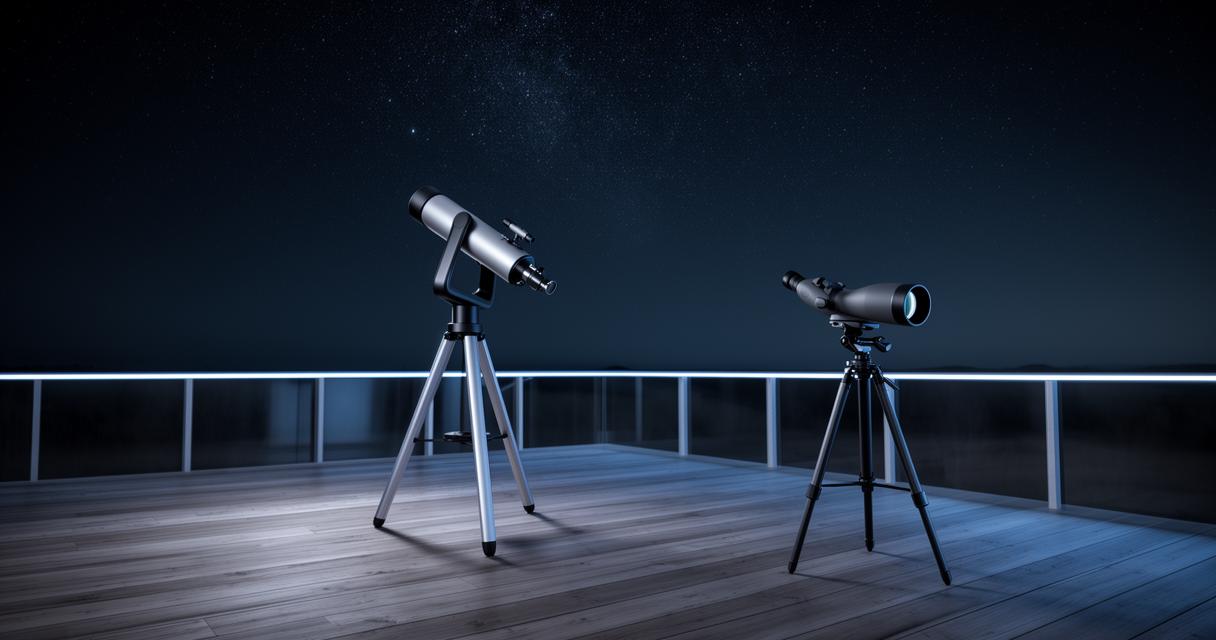
At first glance, telescopes and spyglasses may appear similar, but their optical designs reveal fundamental differences. A spyglass, often referred to as a monocular or handheld scope, is a compact optical instrument primarily intended for terrestrial observation. Its design emphasizes portability and ease of use, making it ideal for activities such as birdwatching, maritime navigation, or casual landscape viewing. The magnification offered by a spyglass is generally modest, typically ranging from five to ten times, which is sufficient for observing distant objects on Earth but limited when it comes to celestial targets.
Telescopes, on the other hand, are purpose-built for astronomy. They employ sophisticated optical systems that gather and focus light from distant celestial objects, enabling detailed observation of the moon, planets, galaxies, and star clusters. The magnification capabilities of telescopes far exceed those of spyglasses, often extending to hundreds of times. This superior magnification is achieved through larger apertures and advanced lens or mirror configurations, which allow astronomers to observe faint and distant objects that would remain invisible to the naked eye or a spyglass.
Practical applications: when to use each instrument
Choosing between a telescope and a spyglass depends largely on your intended use. If your primary interest lies in exploring the heavens, a telescope is the unequivocal choice. Telescopes are designed to reveal the craters of the moon, the rings of Saturn, the moons of Jupiter, and the swirling clouds of distant nebulae. Their ability to gather light and magnify celestial objects makes them indispensable tools for both amateur and professional astronomers.
Conversely, a spyglass is best suited for terrestrial observations. Its compact size and straightforward operation make it convenient for quick glances at distant landmarks or wildlife. While some enthusiasts attempt to use spyglasses for stargazing, the limited aperture and magnification render them inadequate for detailed astronomical work. In essence, if your goal is to delve into the wonders of the cosmos, a telescope will provide the optical performance and versatility necessary to unlock the universe's secrets.
Essential Specifications for Astronomy: Aperture, Magnification, and Optical Quality
Aperture Diameter and Light-Gathering Power for Celestial Viewing
When evaluating telescopes, aperture diameter stands as the most critical specification. The aperture refers to the diameter of the primary lens or mirror that collects light from celestial objects. A larger aperture translates to greater light-gathering power, enabling you to observe fainter and more distant targets. This attribute is especially important when exploring galaxies, nebulae, and star clusters, as these objects emit or reflect minimal light.
For beginners, an aperture diameter of at least seventy to one hundred millimetres is recommended for planetary observation and lunar study. Intermediate users often opt for apertures ranging from one hundred and twenty to two hundred millimetres, which provide enhanced detail and the ability to observe more challenging deep-sky objects. Serious astronomers may invest in telescopes with apertures exceeding three hundred millimetres, though such instruments demand greater commitment in terms of space, portability, and price.
Magnification ratios and optical coatings that define performance
Magnification is another key consideration, though it is often misunderstood. While higher magnification sounds appealing, it is the quality of the image that truly matters. Excessive magnification without adequate aperture results in dim, blurry images that diminish the observing experience. A practical rule of thumb is that useful magnification is roughly twice the aperture in millimetres. For instance, a telescope with a one hundred millimetre aperture can effectively support magnifications up to two hundred times.
Optical coatings play a vital role in enhancing image quality. Anti-reflective coatings on lenses and mirrors reduce light loss and improve contrast, ensuring that the faint light from distant celestial bodies is transmitted efficiently through the optical system. High-quality telescopes feature multi-coated or fully multi-coated optics, which minimize glare and maximize brightness. These coatings are particularly beneficial when observing planets and the moon, where fine details are revealed through crisp, high-contrast images.
Selecting the Right Telescope Type: Newtonian, Dobsonian, and Schmidt-Cassegrain Models
Comparing Reflector and Refractor Designs for Different Astronomical Targets
Telescopes are broadly categorized into two main types based on their optical design: reflectors and refractors. Refractor telescopes use lenses to gather and focus light, offering sharp, high-contrast images that are ideal for observing the moon and planets. Their sealed optical tubes require minimal maintenance and are less susceptible to misalignment. However, refractors with large apertures tend to be expensive and heavy, making them less accessible for budget-conscious beginners.
Reflector telescopes, including Newtonian and Dobsonian models, employ mirrors instead of lenses. Newtonian reflectors are renowned for their excellent light-gathering power relative to cost, making them popular among amateur astronomers. The Dobsonian variant, a type of Newtonian reflector mounted on a simple altazimuth base, is particularly favoured for its ease of use and stability. These telescopes excel at observing deep-sky objects such as galaxies and star clusters, though they may require occasional collimation to maintain optimal image quality.
Schmidt-Cassegrain telescopes combine elements of both reflectors and refractors, featuring a compact design that offers versatility and portability. These instruments are well-suited for a wide range of astronomical targets, from planetary observation to deep-sky exploration. Their folded optical path allows for large apertures in relatively short tubes, making them convenient for transport and storage. However, Schmidt-Cassegrain models are generally more expensive than Newtonian or Dobsonian telescopes of comparable aperture.
Mount Systems and Tripod Stability for Observing Planets, Galaxies, and Star Clusters
A telescope's mount is as important as its optical design, as stability and ease of tracking celestial objects directly impact the observing experience. There are two primary mount types: altazimuth and equatorial. Altazimuth mounts move up and down and side to side, making them intuitive for beginners. Dobsonian telescopes typically feature this mount style, offering simplicity and stability at an affordable price.
Equatorial mounts are aligned with the Earth's rotational axis, allowing for smooth tracking of celestial objects as they appear to move across the sky. This design is particularly advantageous for astrophotography and prolonged observation sessions, as it compensates for the Earth's rotation with a single axis adjustment. However, equatorial mounts are more complex to set up and often more expensive than altazimuth alternatives.
Tripod stability is crucial for minimizing vibrations that can blur images, especially at high magnifications. A sturdy, well-constructed tripod ensures that your telescope remains steady during observation, even in windy conditions. When evaluating tripods, consider materials such as aluminium or steel, as well as features like adjustable legs and vibration-damping feet. Investing in a quality mount and tripod will enhance your ability to observe planets, galaxies, and star clusters with clarity and precision.
Ultimately, the choice between a telescope and a spyglass hinges on your observational goals. For those drawn to the allure of the cosmos, a telescope with the right aperture, magnification, and mount will unlock a universe of celestial wonders. By understanding the key specifications and types available, you can confidently select an instrument that transforms your stargazing aspirations into reality.